

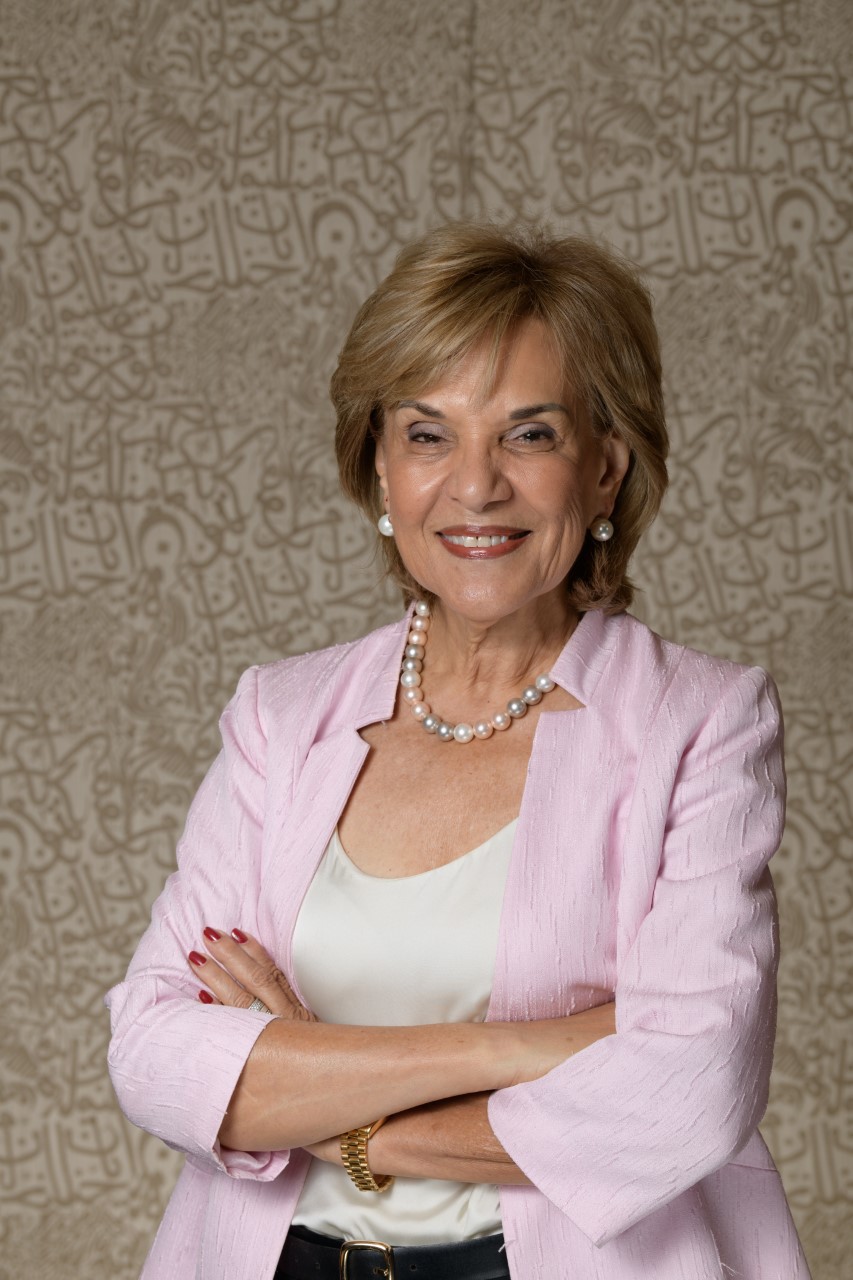
 Aziza Ellozy
Originally published on: December 17, 2002
Faculty at AUC are facing questions that many educators in the US and around the world are facing: What guidelines are there for the production of multimedia materials? Under what conditions can we introduce video and audio clips, digitize images and text for educational purposes? How do we take advantage of innovative instructional technologies and changing educational needs without running the risk of violating copyright law?
For material that is protected by US Copyright Law of 1976, the following applies: the copyright owner has exclusive rights to reproduce, distribute, make derivative works, and publicly display or perform the work. But this law also puts limitations to these exclusive rights with the fair use statute, and this is what educators and scholars look at for guidance. According to this statute, to legally use portions of copyrighted material, we must prove four factors:
1. Purpose and use: should be educational in nature.
2. Nature of the copyrighted work: courts favor published over unpublished work and nonfiction over fiction.
3. Amount and substantiality: the copied material must be a portion of the original work and not a substantial amount (pictures are problematic because one does not want to copy only a portion).
4. Effect of the use upon the potential market for or value of the copyrighted work: this is more complicated than the other three, and some courts have called it the most important of the four.
Experts have recognized that these “four factors” standards are vague and subjective and have failed to provide effective guidance for educators and scholars. At the Center for Learning and Teaching (CLT), we have already come across situations where fair use was interpreted liberally and others where clarifications were needed.
The question then becomes: has there been an effort to issue clearer guidelines with which educators could work? The answer is yes, but with qualified results.
A Conference on Fair Use (“CONFU”) tackled this question in 1994 and, two years later, issued “Guidelines for Educational Uses of Digital Works”. Most of these guidelines failed to achieve consensus support among the conferees except those for the Fair Use Guidelines for Educational Multimedia. These were established by the Congress of the US as a non-legislative report, and the full text of these Guidelines can be found at:
http://www.libraries.psu.edu/mtss/fairuse/guidelines.html
Since this is a new area of concern for our faculty, we will summarize the guidelines here but strongly encourage further examination for more details.
a) What is an educator’s multimedia production? The Guidelines provide an explanation. It is the integration of “individual instructional resources with [the educator’s] own original works in a meaningful way, providing compact educational tools that allow great flexibility in teaching and learning. Material is stored so that it may be retrieved in a nonlinear fashion, depending on the needs or interest of learners.” The “instructional resources” mentioned are copyrighted materials such as slides, videos, books, sound recordings etc.
b) When can the multimedia production be used?
• For face-to-face instruction
• For remote instruction, provided the network access is limited (password-protected)
• For students’ directed self-study.
c) What is the time limitation during which it can be used? Educators may use them for a period of up to two years after the first instructional use with a class, after which permission is required.
d) What limitations are there on the amount of copyrighted works that can be used without permission?
• Motion Media: Up to 10% or three minutes, whichever is less, of the total amount of a single copyrighted work.
• Text materials: Up to 10% or 1000 words, whichever is less, of the total amount of a single copyrighted work.
• Music, Lyrics and Music Video: Up to 10%, but in no event more than 30 seconds, of the music and lyrics from an individual musical work.
• Illustrations and Photographs: A photograph or illustration may be used in its entirety, but no more than 5 images by an artist or photographer may be reproduced or otherwise incorporated.
• Numerical Data Sets: Up to 10% or 2500 fields or cell entries, whichever is less, from a copyrighted database or data table.
e) What are the copying and distribution limitations? Only a limited number of copies can be distributed under certain conditions.
Sources:
“Fair Use Guidelines for Educational Multimedia Established by Congress of the United States” (Online) Available at http://www.libraries.psu.edu/mtss/fairuse/guidelines.html
“Limitations on exclusive rights: Fair use”. Legal Information Institute. Available at http://www4.law.cornell.edu/uscode/17/107.html