

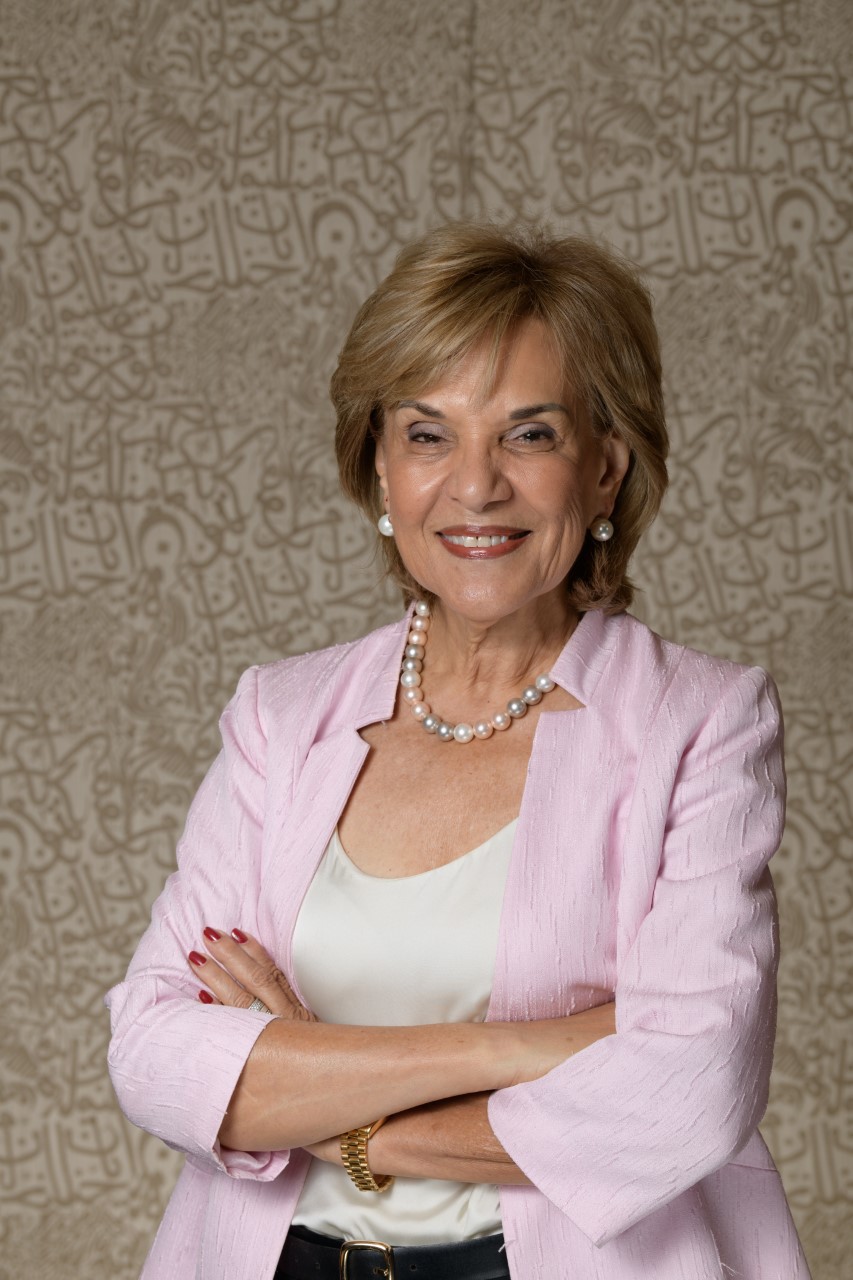
 Aziza Ellozy
Originally published on: December 14, 2003
This overused cliché may well apply to some of the comments that were made during the Faculty Forum last Monday, December 8, 2003.
The discussion started by acknowledging that AUC’s uniqueness derives from its liberal arts approach to education. Dr. Nabil Moussa, Mathematics Professor and Chair of the Faculty Affairs Committee of the Senate, recommended that we make sure that our core curriculum delivers the quality we seek.
In 2001, the late President Gerhart commissioned Crane Metamarketing Ltd. of Atlanta to recommend how AUC’s distinctive role could be promoted. They, too, emphasized that our strength lies in our liberal arts education which, in their words, “seeks to turn out graduates markedly different from those who have followed a narrower educational path…” How…? “through distinctive content and method.” [1]
I would suggest that the “content” of a liberal arts education is more easily defined than the “method”. At AUC, when we think about “method”, there is a consensus among our faculty that greater emphasis should be placed on developing critical thinking. For this, some teaching methods work better than others.
In recent years, research has shed light on how students learn, and methods involving active or student-centered learning are found, by leading educators, to be more successful at promoting critical thinking than the traditional lecture delivered to passive students. The suggestion by ELI professor Cynthia Sheikholeslami that professors let go of power and have their students become more involved in their own learning is at the heart of student-centered learning.
In the next few issues of New Chalk Talk, we will be presenting various active learning strategies that can enhance the traditional lecture. We would like to encourage all faculty members to share with us their own experiences by contributing to the New Chalk Talk series.
Sources:
Bonwell, Charles C., and James A. Eison. (1991) Active Learning: Creating Excitement in the Classroom. ASHE-ERIC Higher Education Report No. 1. Washington, D.C.: The George Washington University, School of Education and Human Development.
[1] Crane Metamarketing Ltd., Georgia. “Review and Reflection Paper”, p.20. The American University in Cairo. NY, NY. March 2002.
