
 CLT Team
Curiosity, resilience, trust, and human connection have become paramount as universities worldwide grapple with the opportunities and risks artificial intelligence (AI) poses for teaching, research, and academic life.
The CLT Fall 2026 Symposium created a space to explore ideas and strategies for intentionally designing for curiosity in your classroom and building learning environments that spark genuine engagement. The symposium was attended by 220+ participants, including AUC faculty and students, as well as external guests. Through the symposium’s sessions and keynotes, participants examined practical strategies for building resilience in students, fostering trust, and helping students understand how, when, and why to use AI.

The symposium started with four face-to-face interactive sessions on Sunday, September 27th. These sessions provided opportunities for faculty to share their ideas and insights with the AUC community of faculty, teaching assistants and students. A total of 80+ attendees, including 63 faculty members and 21 students, participated and interacted throughout the day. Below is a summary and highlight recap of these sessions.
Session 1: Analog Inspiration: Human‑Centered, Values‑Driven Teaching with AI
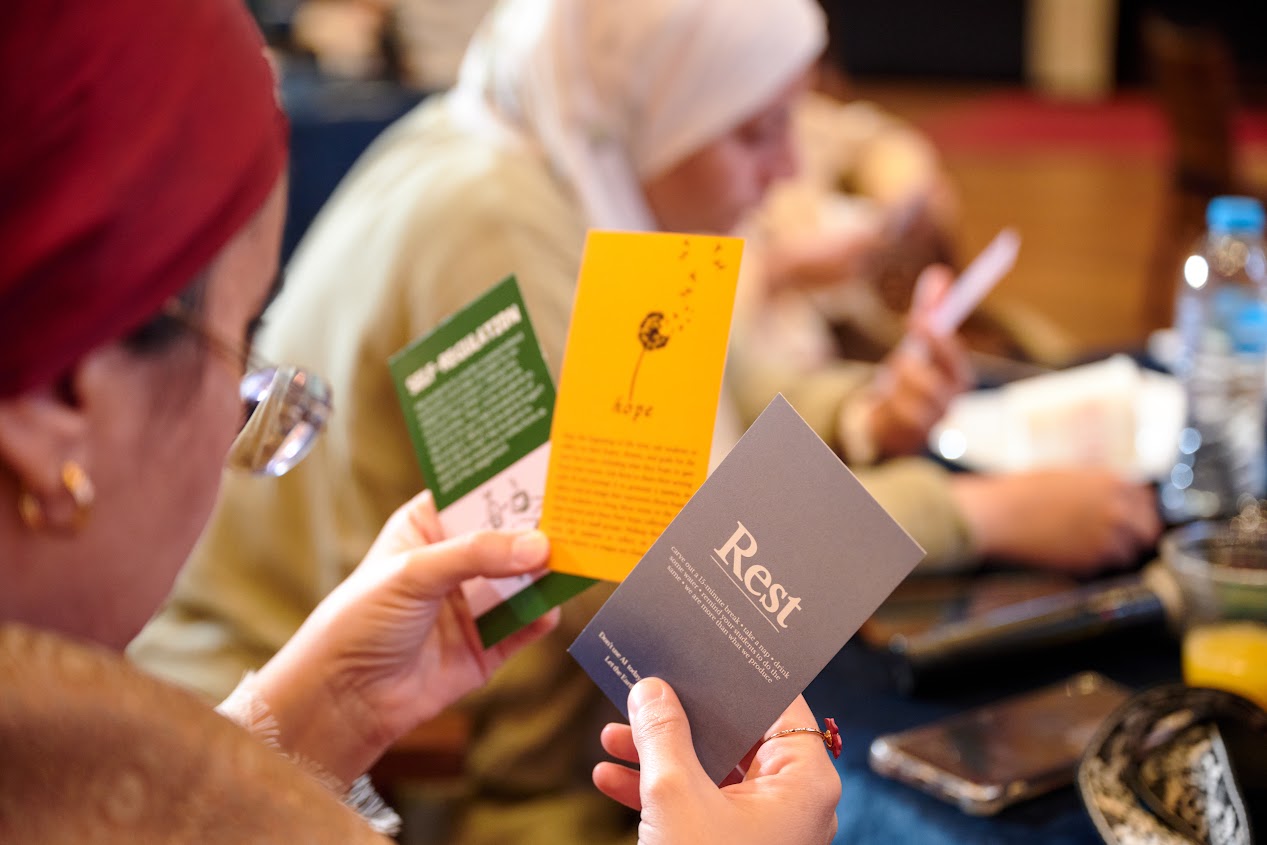
This interactive workshop brought faculty together for a collaborative, card-based roundtable designed to explore core teaching values, redesign learning relationships, and thoughtfully integrate AI where it benefits teaching and learning. Using Carter Moulton’s Analog Inspiration card deck, participants engaged in hands-on rounds of card play, unpacking the uniquely human values they are committed to protecting and cultivating in their classrooms. By the end of the session, faculty reflected on the core values guiding their teaching practices, placing trust, perseverance, integrity, critical thinking, self-reflection, and care at the forefront. Here are some of the key values and practical strategies our attendees intend to embed in their classrooms moving forward:
| “The issue of perseverance has changed the way I think about AI activities. Instead of focusing on the product, this helps me emphasize the process. So it is not the result (product) of using AI and reflecting on it, I will focus on having them monitor the process that led to an acceptable product.“ “An emphasis on values that are difficult to be replaced by machines for example, insight, joy and imagination… and designing activities to discuss that would allow students to be free from the feeling of ’having to use AI’ to succeed, show mastery or just accomplish the task.“ “Hope: I will ask students to write down how hopeful they are in achieving one or more of the learning outcomes, then later by the end in a class discussion will reflect on whether they were able to achieve any of their goals or not.” “I think the first human value is ‘integrity’ in the way that they should be responsible for their own writing and this leads us to the second value which is ‘concern’. That is to say they should be concerned with their writing and be responsible as well.” |
Session 2: Community Resilience for Faculty and Student Thriving
In a world where both faculty and students are facing continual sources of stress, both internal to the educational environment and beyond it, this interactive workshop aimed to equip faculty members to widen their “Resilient Zone” in order to empower them and their students to better handle life stressors.
The session began by describing the community resiliency model, and had an interactive segment asking participants what stresses them and what they think stresses their students, on the professional/academic, social, or personal levels. We then asked faculty members to think about what brings them joy or brings them confidence, strength, and calm to help them cope with difficult times. Participants were then given different scenarios of students who face different and particularly common stressors: from being a freshman wanting to declare, to being an international student, to being a female in engineering. Faculty members worked in small groups to imagine how to support students’ resilience for their particular stressors, and shared the outcome with the wider group.
How might you make changes to bring more hope and joy to your life and nurture your own resilience?
- “I think more self-awareness can help me know what makes me happy.”
- “Take the time to breathe, step back and reflect. Also, try not to overthink things or judge too harshly.”
“Ensuring my students get the best learning experience.” - “Incorporate brief intentional pauses between classes to disconnect and breathe, while setting clear evening boundaries around email to protect family time. Anchor my days with daily grounding rituals, embed structured care through flexibility.”
- “Take a pause everyday and remind myself of something I’m grateful for. Build in time in my week to do something active with friends.”
- “Start from within, a bad day doesn’t mean a bad life. Not being your absolute perfection one day doesn’t cast doubt on all the work, timeless nights and years of perseverance.”
- “Cut down on work and know where to stop and pay attention to other important aspects of life. Not to feel guilty when I devote time for my well-being.”
How might you integrate elements to support the development of students’ resilience into our course/teaching?
- “Show experiences and connect with students.”
- “Show students it is safe to make mistakes, give students appropriate validation, make them feel seen.” “Design assessments that are relational & show students care and focus on wellbeing & sense of belonging in the classroom.”
- “Guide students to resources that can facilitate their journey. Be more empathetic.”
“Humanizing the classroom even more: share my vulnerability, show I really care, do more varied activities, and keep trying new things.” - “Showing some empathy and flexibility regarding the assessments and deadlines. Beside the verbal encouragement, a practical one is as much important. So, revisiting our assessments’ structure is important so we can balance between the course LOs and support students’ resilience.”

Session 3: Restoring Trust, Building Resilience, and Igniting Curiosity: A Student-Faculty Dialogue Around (Their) AI Use
In this interactive workshop, faculty members and students discussed in small groups how curiosity, trust and resilience are impacted by the presence of genAI. Each table had one of the three themes, and participants were asked to collectively reflect on the influence of GenAI on that theme with a series of prompts, inviting them to also take note of their own actual AI use, why students use AI in these ways, and how faculty use and perceive it for themselves and others. Here are some faculty and student responses to what needs to be done to build resilience, restore trust and ignite curiosity:
| Curiosity “We need to always remind our students about AI as a tool to help them not to think for them”“Use AI as an assistant..rather than a tool where you ask a question and take the answer blindly without thinking about or challenging it” “Use AI to create questions about the things we are curious about rather than seek answers to questions”“Planning for activities or experiences that are AI free.” Trust “Build confidence in students’ skills and lower the stakes for mistakes” “Have clear, transparent rules of AI usage for everyone to abide by.” “Always assume the best” “Build connections by having people reflect their voice” Resilience “Allow space for trust, communication and patience” |
Session 4: Before They Learn – Why Trust Comes First: Strategies for Stronger Faculty–Student Relationships – Facilitator: Hadeel El-Ahraf (Psychology Department)
In this interactive session, faculty unpacked the different dimensions of classroom trust, identified barriers that get in the way, and worked together with cases to generate practical strategies they can use in their classrooms for building and maintaining trust. Here are some faculty responses around some trust-based moves they could take from this session to their classrooms:
| “Talk more about my responsibilities…check in more with students…” “To give more care for aspects pertaining to student trust in class and in the syllabus” “More compassion, less judgement” “More focus on reliability, model vulnerability…more focus on “why” questions for assessments” “…providing constructive and thoughtful feedback” |
In addition to the daylong face-to-face sessions, CLT also hosted three international keynote speakers on September 29th, September 30th, and October 5th, featuring Sam Illingsworth, Peter Felten, Laura Burgis, and Victor Manalo. The keynote sessions were very well received by faculty and teaching assistants from AUC as well as other institutions. Below are summaries of key takeaways from the keynotes.
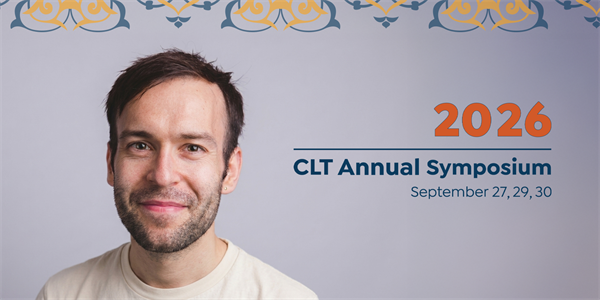
Keynote 1: Curiosity Is the Skill the Machine Cannot Fake: Building Resilient, Questioning Learners in the Age of AI by Sam Illingworth
91 participants attended this keynote where Sam Illingworth addressed the role of AI in higher education, arguing that while AI tools can generate content and answers for students, curiosity remains a uniquely human skill that machines cannot replicate. Illingsworth raised fundamental questions about the purposes and practices of teaching in higher education today. He advocated for critical AI literacy; teaching students when, why, and how to use AI rather than just teaching them about prompt engineering. He also warned against cognitive offloading that diminishes human curiosity and student engagement. Here are a few takeaways from the keynote:
- Curiosity is a teachable, measurable, and actionable human skill that is naturally practiced. AI tools will respond to prompts, but they have no intrinsic desire to know anything. Curiosity requires human judgment, discernment, and empathy.
- Critical AI literacy1 focuses on evaluating outputs, identifying fabrications, and understanding the ethical, institutional, and pedagogical limitations. Illingworth recommends using AI to generate outputs only when one has the existing knowledge or verifiable resources to independently verify the answer.
- Illingworth also discussed that while AI can increase the volume and variety of creative ideas, over-reliance on AI can decrease student enjoyment, task value, and their motivation to remain curious. This concept invites faculty to reflect on how to talk to students about their AI use in relation to their learning.
- Illingworth invited participants to explore using AI tools as “Socratic coaches” (i.e. ask them to teach you through asking you a series of questions) to help structure and scaffold learning. For example, instead of asking AI to explain ‘cognitive offloading’, ask it to provide you with a series of questions that enable you to better understand what it is. Illingworth encouraged participants to take this approach to their classroom.
- In an interactive activity with the audience, Illingworth also explained the idea of Cross-Linguistic Testing, where testing the same pedagogical question in English and another language could help observe and assess output consistency, reliability, and cultural/linguistic nuance.
- Illingworth shared results of his own research on AI policies in UK universities2, and he encouraged educators to co-create AI use policy with their students in the classroom to strengthen their sense of ownership.
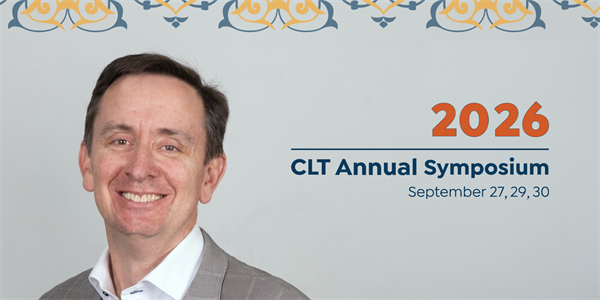
Keynote 2: Connection, Curiosity, and Care: Practical Strategies of Teaching Today by Peter Felten
78 participants attended Peter Felten’s keynote where he invited educators to think about the future of teaching and how they can center on care, curiosity, and connection, especially in an era where AI can either support learning or encourage what he referred to as cognitive surrender (Shaw & Nave, 2026) and cognitive offloading3. Here are a few takeaways from the keynote:
- Teaching is formative, not just informational. Felten framed higher education as a place where “humanity” is formed, meaning universities shape students not only as disciplinary experts but also as people and community members.
- AI makes the balance of challenge and support more urgent. Drawing on Sanford’s framework4 and adaptation5, Felten emphasized that students grow when they experience high challenge with high support; too much AI reliance can reduce persistence, weaken performance, and create an “illusion of learning.”
- Care should be demonstrated through validation. Faculty can support students by communicating high expectations, belief in students’ capacity, and specific guidance for improvement. Felten highlighted validating feedback emails and structured peer feedback as practical strategies.
- Curiosity grows through effortful immersion. Felten argued that meaningful learning requires students to engage deeply and effortfully with knowledge, rather than bypassing struggle through AI or surface-level completion.
- Connection and academic friendship matter. The keynote stressed that social connections support students’ well-being, persistence, and learning. Examples included making friendship an explicit course goal and using collaborative or two-stage exams to promote peer learning.
- A practical starting point is transparency. In the discussion, Felten advised faculty to begin by talking openly with students and colleagues about what learning activities are designed to do, why they matter, and how AI changes the learning environment.
Here’s a faculty member’s reflection on the Keynote:
| “Keynote 2 was brilliant. What I heard confirmed a lot of what I am already doing, which is extremely reassuring. I also learned a lot about balancing challenge and support to enhance engagement, care, and curiosity, particularly through “productive failure”, “individual exams and collaborative exams”, “validation theory,” and “curiosity journal.” There is “a ton of research,” he said, that supports his ideas, so I am left with a strong motivation to read all of this up-to-date research.” |

Keynote 3: Fostering Collective Wellbeing and Ecological Belonging on Campus by Laura Burgis and Victor Manolo 6
62 participants attended this keynote where Burgis and Manolo invited attendees to explore how compassionate leadership can transform institutional wellbeing. The facilitators reminded us that three important capacities we need to grow on purpose are curiosity, trust and resilience, and that all of them begin in the body, and each is shaped by the systems within which we live.
The facilitators showed participants the difference between the traditional approach of asking someone what is wrong, to the trauma-informed approach of asking what happened to them, to the more agentic approach based on resilience, which asks what is right with the person, helping individuals uncover their own strengths for healing and regulating their nervous systems to deal with stress.
Among the key ideas shared in this keynote was the importance of our role as leaders and educators in widening the resilient zone of our learners and peers, and the facilitators shared some important ways in which to build trust and resilience within our current spaces. They reminded us that people need to feel safe in order to display and follow their curiosity, and gave suggestions for changing cultures. They encouraged us to ask about the conditions our learners face, and to ask who is not in the room and why. One impactful quote from the session was:
“Regulate before you relate. Listen with intention before you lead with direction.”
Towards the end of the session, participants shared some of their key takeaways, including:
- “An awareness of what the application of compassion means in the classroom in terms of building communities.”
- “Practicing how to pause before reacting”
- “The organization of class and what’s possible when you pay attention.”
- “Can we connect through our differences?” A leader practices and the team follows.”
- “Students need to be given space for their emotions in the classroom. Be less objective focused and conscious of the time.”
- “Creating opportunities for more curiosity by (a) making myself vulnerable and showing what I don’t know & asking questions to make them see beyond the “frame”; and (b) importance of building trust and safe/brave space before expecting curiosity to show”
- “Pauses can be frequent and intentional – are beneficial for leadership, wellbeing and success as a leader.”
- https://samillingworth.com/slow-ai ↩︎
- What UK university AI policies actually do: A study of 96 institutions – HEPI ↩︎
- Lodge J. M. and Loble L (2026). Artificial intelligence, cognitive offloading and implications for education, University of Technology Sydney, doi:10.71741/4pyxmbnjaq.31302475
↩︎ - Sanford, N. (1967). Where Colleges Fail: A Study of the Student as a Person. Jossey-Bass.
↩︎ - Kapur, in Felten & Forsyth, 2025 ↩︎
- The 3rd keynote recording is shared with registered participants only.
↩︎
