
 Brenda Segone, Caroline Mitry and Yasmine Abulfadl
 As a strong advocate of diversified pedagogies, I wished for a different assessment for my students and was motivated by the enthusiasm my daughter had felt in one of her classes, during a debate based on role playing. It was as if she had come out of a live and vibrant performance. I wanted to give the same type of positive experiential learning to my students. This assignment in the course Art and Design Making: from the digital era to AI (DSGN 3270) was the third and last one in the semester.
Even though I mostly teach through informal class discussions, organizing a formal debate, especially the scaffolding of it, and mediating it in a professional way, wasn’t something I was very familiar with nor something I wanted to exert too much energy in. I contacted CLT to help me figure things out quickly and professionally. Using debate in the classroom turns out has an academic grounding and the technique CLT suggested for this particular one is called: structured academic controversy. It is part of a philosophy of education that considers conflict or disagreements as engaging learning opportunities. It can be beneficial for topics that trigger strong emotional responses, such as the use of AI in art or design.
During the initial consultation we had, CLT briefed me on the different types of debates available such as the opinion line, and the switch format. Together, we brainstormed the composition of the teams and the nature of the roles trying to tailor the assignment to the content of the course and its learning outcomes. The debate aimed at exposing students to different points of view through role playing. In addition, they got to learn to differentiate between argument and example, articulate stances briefly and precisely, use arguments to support or counter a stance and present visual material to further convince an audience.
After the initial meeting, we continued finalizing all the details via email. CLT shared resources such as the debate etiquette and was helpful throughout the full design process. Following this, CLT shared pre-written precisely timed steps for the debate with a grade weight for each part that I added to my own assignment brief. Things had become concrete. CLT also offered to have someone assist me during the debate by keeping the time and briefing the students on the different steps, while I would be taking notes of the students’ performances, which was very helpful.
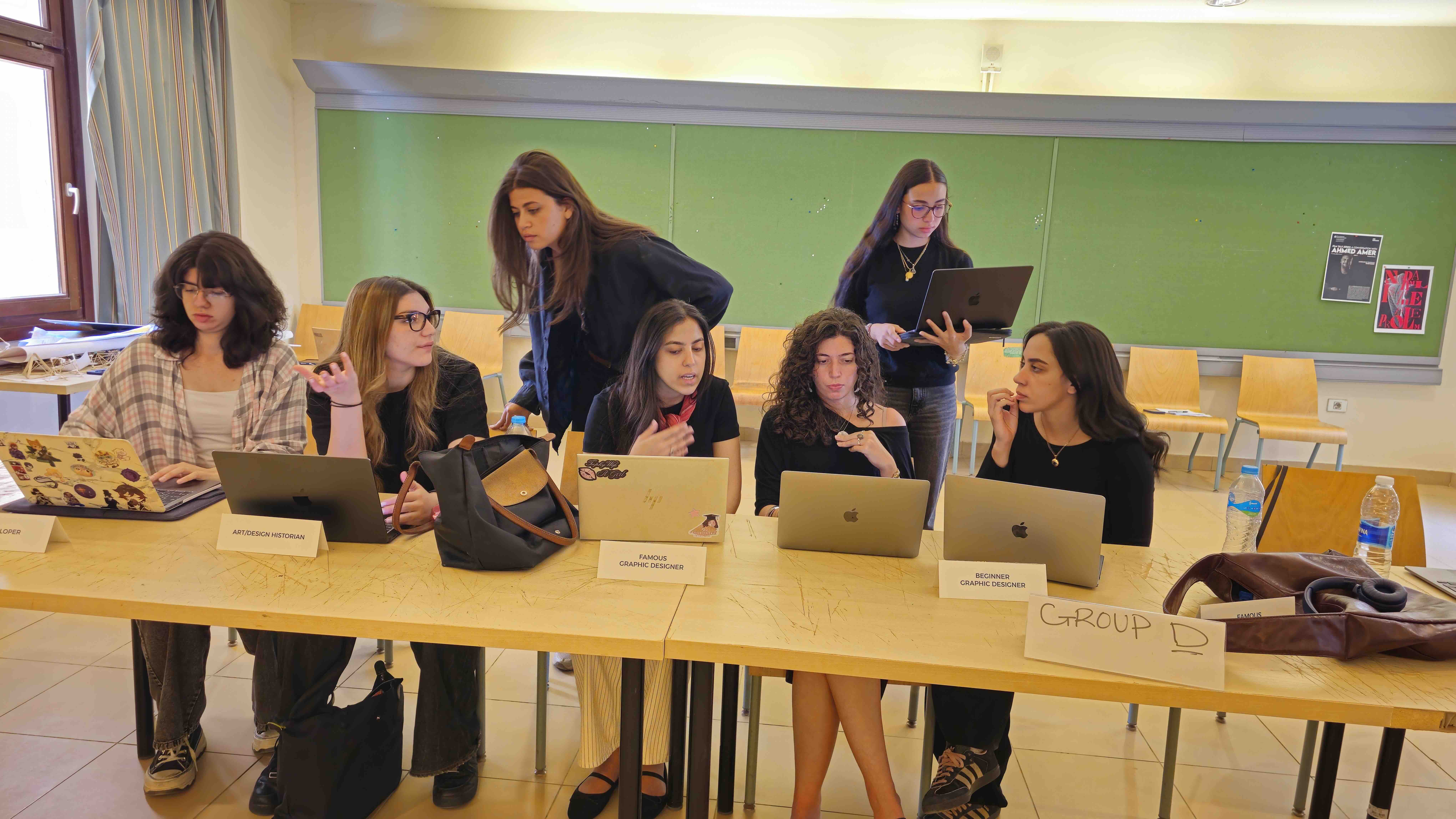
Following the structure co-developed with CLT, each student was assigned a role (art or design historian, AI developer, beginner artist or designer, famous artist or designer). Everyone had to prepare arguments for both stances: for and against the use of AI in Art and Design. As a preparatory step, one class session was dedicated to extracting appropriate and interesting arguments for both positions, based on their role, from readings from the field such as There is Nothing Artificial About AI Type Design by Steven Heller (2022), Do less with AI, The promises of automation can only come true if you’re working smarter, not harder by Joe Bernstein (2026), How Artificial Intelligence Sees Art History by Will Fenstermaker (2019), or Midjourney Founder David Holz On The Impact Of AI On Art, Imagination And The Creative Economy by Rob Salkowitz (2022) amongst others, and building upon them. Each student had to then develop a persona, prepare to present her/his arguments during the debate and generate one AI image to support an argument.
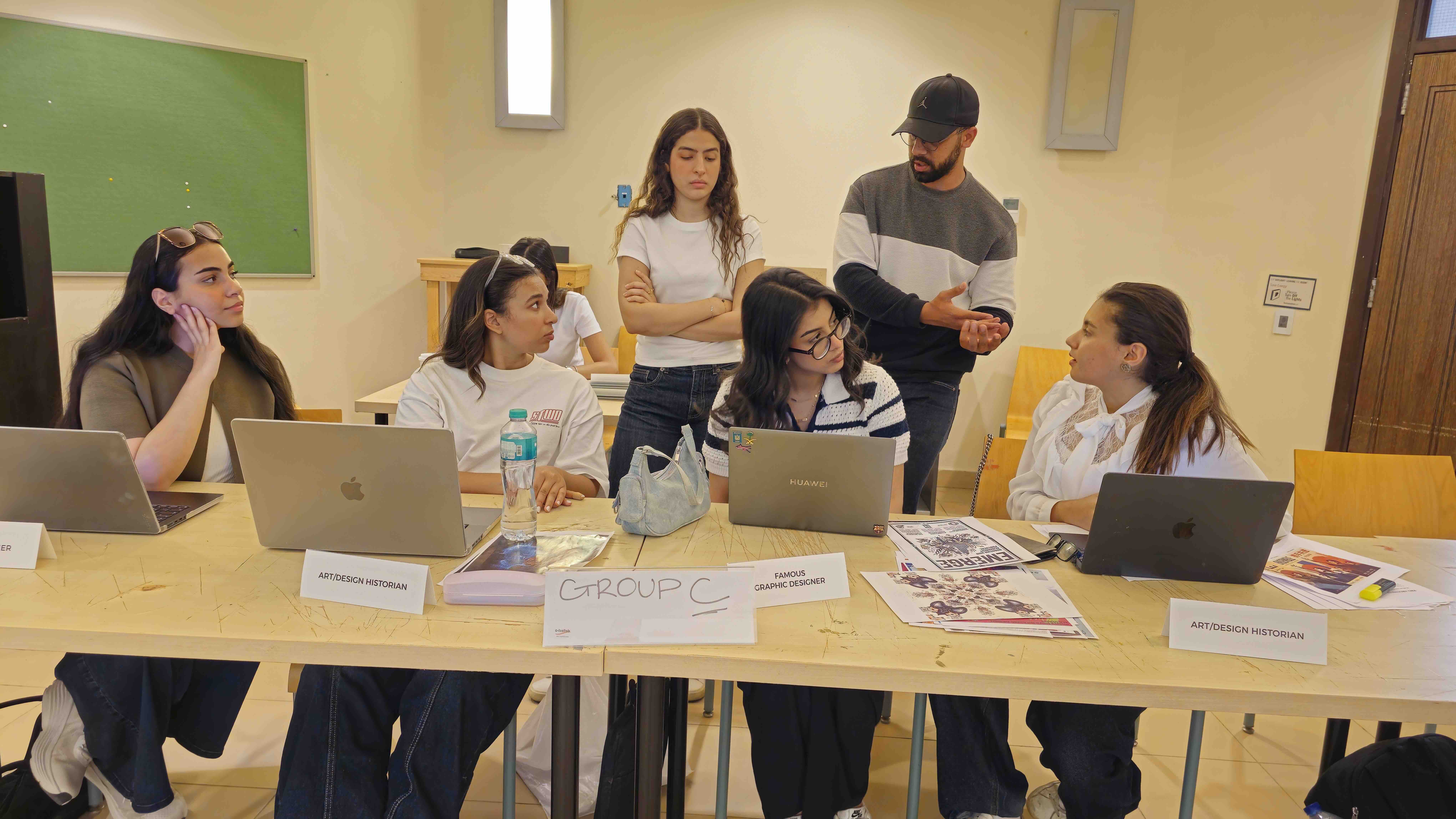
The students would discover their team and their stance on the debate day. Once that happened, each team would convene to agree on the arguments they would be presenting, with one condition: not to repeat the same argument twice. Each team would also choose which AI generated image was most effective for supporting their argument.
At the start of the course, students had very strong opinions about AI, largely unfavorable. After the course, and in particular this assignment, they developed a more objective view on the technology, but most importantly for me as an educator, they managed to articulate a personal negotiated stance, whereby they took agency over what role they want AI to play in their practice.
The debate turned out to be very professional, in that it resembled live television debates with passionate moments. In that respect, it exceeded my expectations. Having an external presence that monitored the speech time was definitely a success factor. The students’ feedback was extremely positive. Playing a role that went against their original view forced them to explore a different angle in order to persuade. Adopting a stance they agreed with forced them to provide solid arguments to justify their view. Overall, they grew as learners, given that the debate exposed them to multiple arguments and rebuttals. Their only comment was that they felt limited at times in their ability to contribute to the debate as they were only allowed to respond once in each part. Indeed, the group was big with 23 students in total and time was limited.
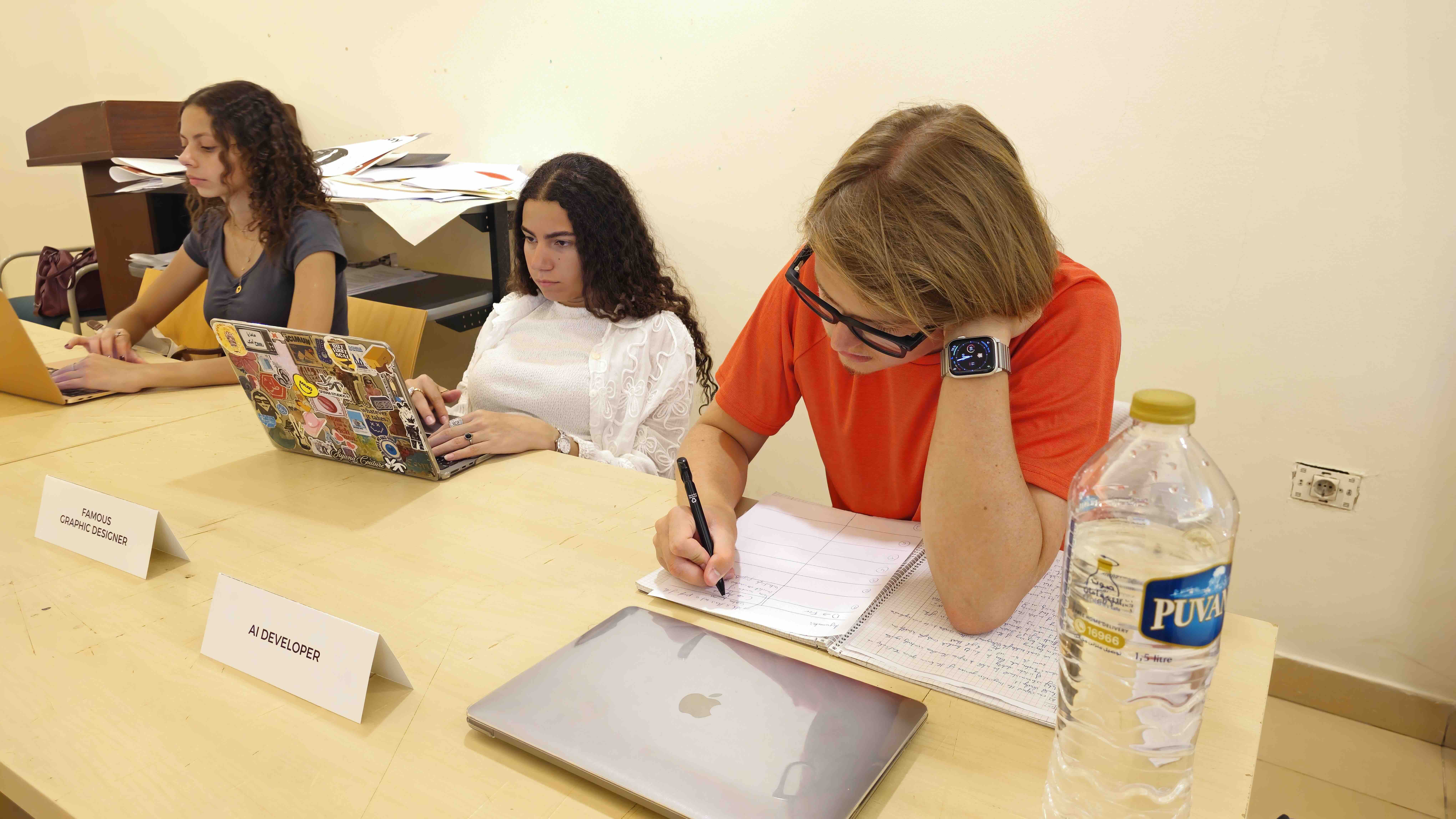
Ultimately, hearing views from other students who were acting as historians, practitioners or developers enabled them to approach the question calmly, develop deeper insights, accept opposing views, stimulate their critical thinking, and position themselves neither for nor against but somewhere in-between.
To enhance the teaching and learning experience for me and my students in the future, I would keep the stances undisclosed, to make guessing part of the “game”, hold the debate on one day, and prepare a grading feedback sheet that can be easily filled in-class during the live discussion.