
 Jana Midani and Phyllis Wachob
Originally published on: October 13, 2009
A critical friend is an oxymoron, a contradiction in terms. A critic is one who tells us good and bad things about our performance. A friend supports us, whether something is good or bad. A critic is not afraid of hurting our feelings, but a friend cares very much. So, how can someone be both a critic and a friend? On the other hand, what better kind of critic can you find than a friend? There are no answers to this conundrum, but there are many reasons for trying.
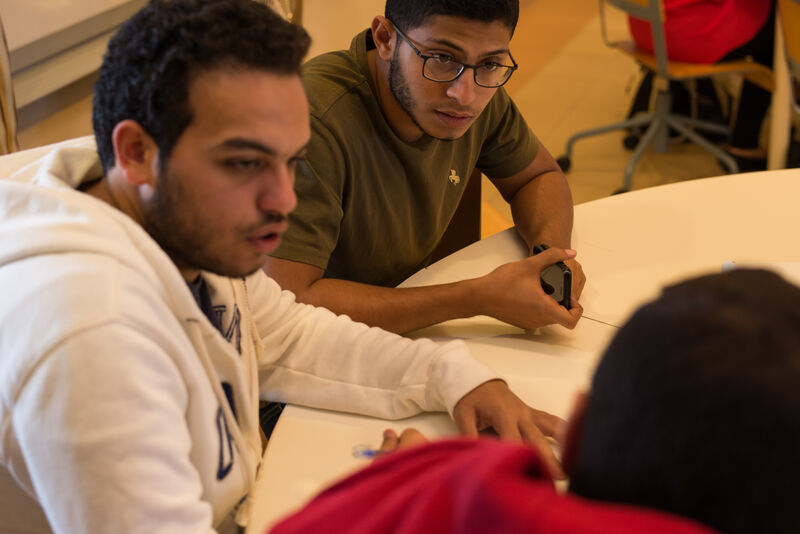
Critical Friendship Circles (CFC) are groups of students (or teachers) that meet to solve problems and give feedback on classroom performance. Protocols are formal structures for giving feedback by peers. By formalizing the process, everyone knows the ‘rules of the game’ and can play their roles as critics and friends in the appropriate way at the appropriate time. By taking turns to present their work in class, students can practice presentation skills. They also learn to listen carefully without the need to ‘defend’ themselves. Circles are groups of mutually supportive friends, so all friends learn to formulate helpful feedback in supportive language, and brainstorm together for finding solutions to concerns.
Feedback is given in two basic ways, warm and cool. The final feedback is the challenge or ways to improve the presentation. A feedback session using a protocol could look like this.
Participants:
Presenter
Facilitator (one of the ‘friends’)
Recorder (uses a form)
Friends
Total Time: 10-12 minutes
Presentation: (1-2 minutes) After giving the class presentation, the presenter offers a short self-critique or brings up questions or problems for the CFC to discuss. The presenter might as such questions such as, “I thought I was doing X, but in class….. What do you think went wrong?” “I wanted to convey Y, do you think I was successful or not?” The recorder notes the major points and the question(s).
Probing session: (1-2 minutes) The facilitator leads the probing session. Friends ask probing questions prompted by what they heard and said. They might ask for clarification or reasons behind presenting the material in a particular way. The presenter answers the questions.
Warm Feedback: (2-3 minutes) Led by the facilitator, the friends point out good things that the presenter did during the presentation. They might also comment on positive ways the presenter has tried to solve a problem. The conversation is among the friends, and does not include the presenter. The presenter acts as a fly on the wall, listening in and taking notes. The recorder notes major strong points. This stage is aimed at reassuring the teacher on successes. Some examples of how warm feedback could be phrased: “I really liked the way S___ organized the class…” “In my opinion, the materials were well suited to…” “I think the presenter did a good job in…” The language is positive but impersonal, addressing the presentation, not the presenter. The friends do not address the presenter directly, in other words, they do not say, “You did that well…”
Cool Feedback: (2-3 minutes) Friends, in a conversation among themselves, give
suggestions of what might have gone wrong, what might have been better and what the presenter may try for next time. The friends need to be sensitive about their language in giving this type of feedback so as not to break the bonds of friendship. The recorder makes notes on the strong points while the presenter listens actively to the feedback and takes notes. The presenter may not answer any questions or make a comment on feedback at this point, as the presenter needs to devote all his/her energy to listening and thinking about the feedback. Some examples of how to phrase cool feedback could be: “I think the presenter
was asking too much of the students. S/he might have tailored materials for this group of students…” “I believe M___ might have considered…” “Perhaps the directions were not clear enough. Maybe next time the teacher could…” Again, the friends do not address the presenter directly, but remain aware that the presenter is listening.
Wrap-up (and Challenge): (2-3 minutes) The facilitator, with help from the friends, summarizes the discussion with particular reference to the presenter’s question(s) and formulates a challenge to the presenter. The presenter thanks the friends for their time and effort, comments on the most important points and/or accepts the challenge(s). My recent research with MA TEFL students has shown that there are two key factors to making the CFC work. The first is the cultural factor that discourages overt and public criticism of a friend. Egyptians, in particular, find it difficult to give and/or receive cool feedback. Western students, and more mature students, are more apt to recognize the situational nature of the feedback and ‘accept’ it within the parameters of the protocol. The other key factor is language. The most difficult part of learning a foreign language is choosing the right words, the right tone and the right language for ‘difficult’ situations, such as giving cool feedback. Therefore, training students and modeling good language is important for successful feedback that leaves all critical friends emotionally intact.
However, my research also shows that despite these ‘problems’, CFCs are extremely valuable. They help students become more critical, both of others and of themselves, and hone skills of observation, reflection and accepting challenges. CFCs help every student in the class by engaging individuals in all parts of the circle, as presenters, facilitators, recorders and friends.
Remember:
- Circles are round.
- Critical Friends bring a different perspective based on observations, judgment, evidence, analysis and insight.
- Listen more, speak less.
References for Critical Friends:
Costa, A., Kallick, B. (1993). Through the Lens of a Critical Friend. Educational Leadership, October 1993: 49-51.
Cushman, K. (1998). How Friends can be Critical as Schools Make Essential Changes. Horace14(5). http://www.essentialschools.org/cs/cespr/view/ces_res/43 National School Reform Faculty web for articles: http://www.nsrfharmony.org/articles.html

